Trusted by Over 15 000 Families since 2001



 Available Puppies
Currency
Country
Language
Home / Breeds / Affenpinscher
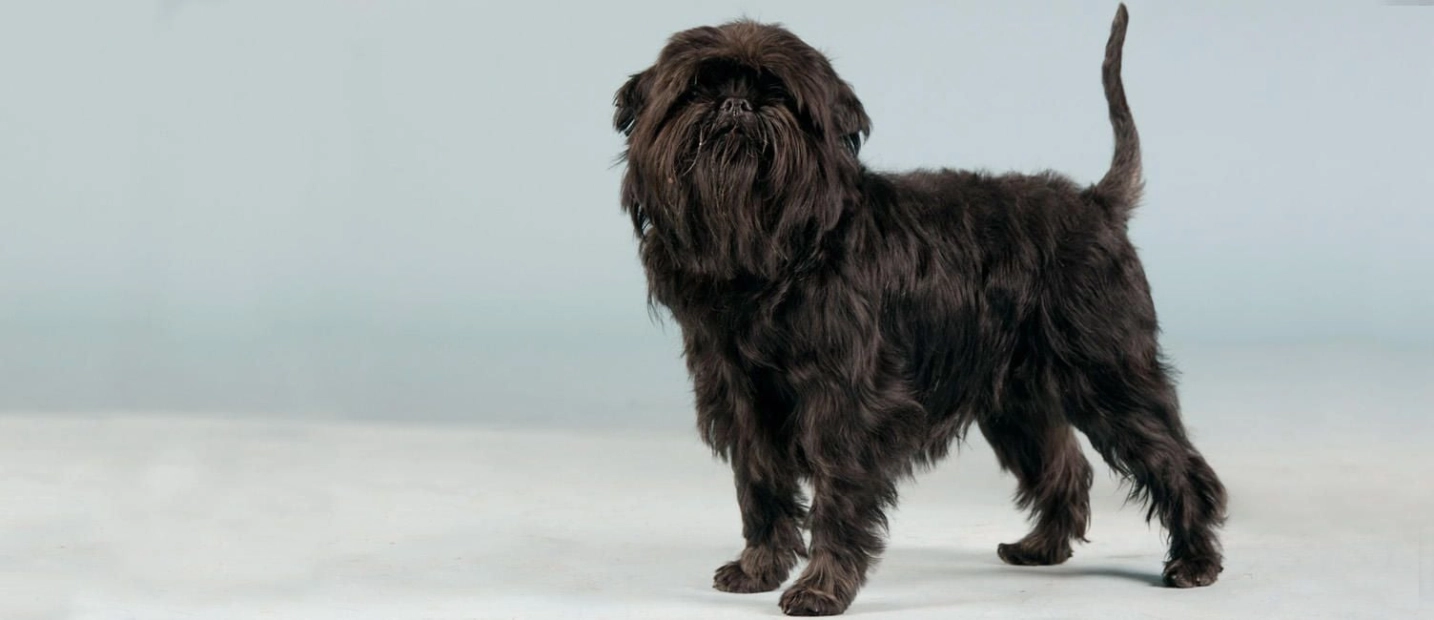
Affenpinscher Breed Guide
A fun loving, furry faced playmate
Written by Sandor Fagyal, EuroPuppy Founder &
Dog Industry Expert
Last updated: May 12, 2026

Suitability

Good with Kids

Generally Friendly with Pets

Suitable for Apartment Living

Good for first-time owners

Breed
Size
Small
Height
23-30 cm
9-12 inches
Weight
3-5 kg
7-12 pounds
Lifespan
10-14 years
Coat Type
Medium rough coat
Colors
Black. AKC also accepts grey, silver, red, black & tan, belge

Care

Moderate Energy (Regular walks/play)

20–40 minutes of exercise/day

High (Frequent professional grooming)

No Shedding (Hypoallergenic)

Rarely barks

Easy (Responds well)

Some health risks

Mostly allergen (Low allergen)

Needs Constant Company
Similar Breeds


Ready for your Affenpinscher Puppy?
Affenpinscher At-a-Glance
Breed Overview & Physical Traits
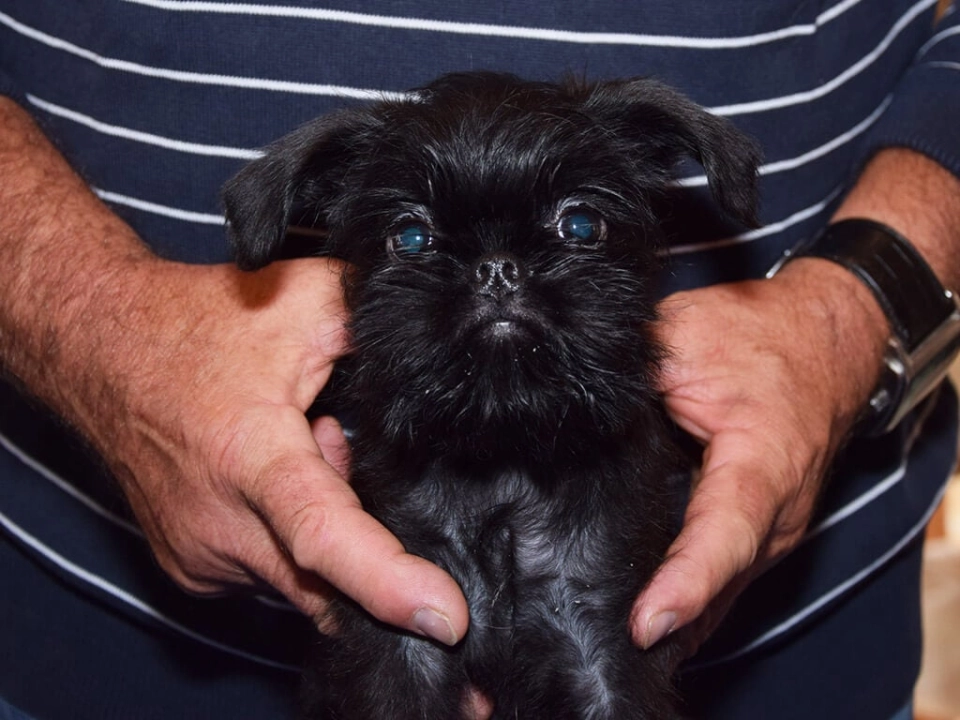
The Affenpinscher has roots in 17th-century Germany, where it earned its keep as a fearless ratter in kitchens, granaries, and stables. The name tells the story immediately — Affe means monkey in German, a nod to the breed’s flat face and wide dark eyes. Early dogs were larger than today’s version, bred purely to clear homes and farms of rodents.
Breeders gradually shaped the Affenpinscher into a more compact dog by crossing early Pinschers and Schnauzers, sharpening both its instinct and charm. This little ratter proved so entertaining that German women began keeping them as household companions. The Monkey Terrier — as it is also known — is notably ancestral to both the Brussels Griffon and the Miniature Schnauzer.
The AKC officially recognised the breed in 1936, and the FCI followed in 1955. Today, the Affenpinscher has long left the grain store behind and settled comfortably into city and apartment life. Its compact size, moderate energy, and outsized personality make it a natural choice for singles, couples, and families with older children.
The Affenpinscher wears a dense, wiry, rough-textured coat — that tousled, lived-in look is part of its unmistakable charm. The fur sits roughly one inch long on the body, growing longer and shaggier around the head and neck to frame the famous monkey-like face. Softness is a fault; a correct coat must feel harsh to the touch.
The FCI and British Kennel Club recognise black as the only permitted show colour. The AKC is more flexible, also allowing grey, silver, red, black and tan, and belge — a warm blend of red, brown, black, and white hairs. Regardless of colour, every Affenpinscher has dark eyes, a black nose, and black pigmentation on lips and paw pads.
Affenpinscher Temperament
Playfulness, Affection, and Social Traits
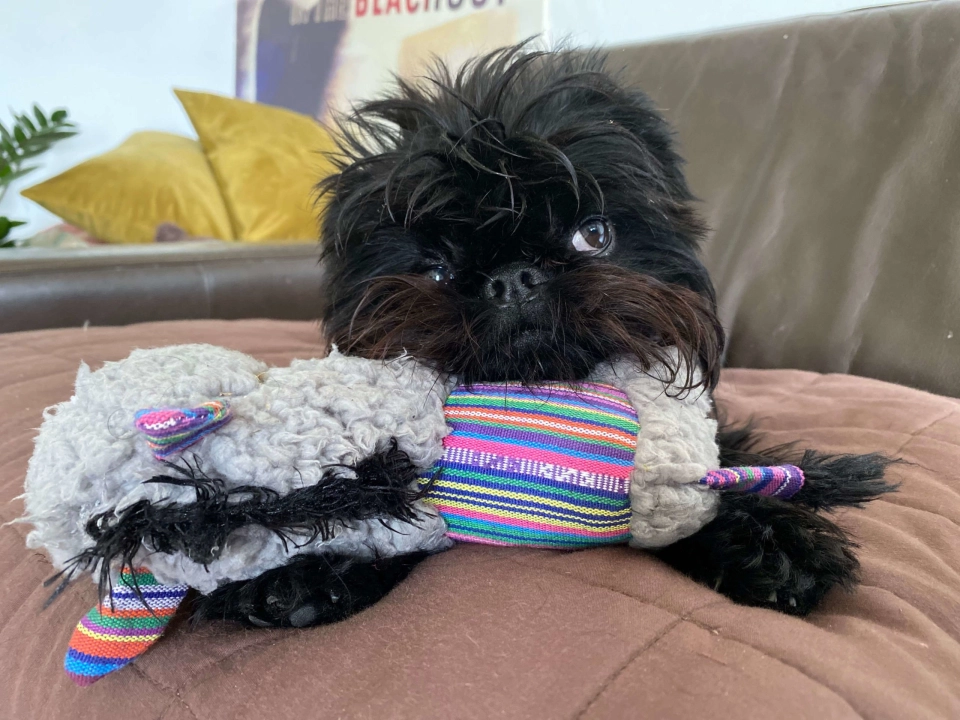
Affenpinscher owners consistently tell us that the biggest surprise isn’t how funny this little dog is — it’s how fiercely loyal they are. Beneath all the clowning and bravado lives a dog that genuinely needs your company and thrives on being part of your world. This is not a dog that sits in the corner. It’s in the room, in your lap, and usually in the middle of whatever you’re doing.
The Affenpinscher — sometimes called the Monkey Terrier — carries itself with a comic self-importance that is almost impossible not to love. They play with infectious enthusiasm, bounce back quickly from a scolding, and hold no grudges. Social, spirited, and endlessly entertaining, they bring a particular kind of joy to any home that’s ready for a dog with genuine personality.
-
Do Affenpinschers get along with other dogs?
Generally, yes — Affenpinschers are sociable and confident around other dogs, especially when introduced early. They love a good romp at the dog park and rarely hold grudges. That said, their bold streak means they won’t always back down from a bigger dog, so always supervise them around unfamiliar or much larger animals.
-
Are Affenpinschers good with kids?
They can be wonderful with children who know how to be calm and gentle. Because of their small size and sensitive nature, they do best with older kids rather than toddlers. Rough play or unexpected grabbing can cause them to react. With the right household — and proper introductions — they make lively, loving playmates.
-
Are Affenpinschers affectionate with their owners?
Affenpinschers are deeply devoted to their people. They form strong bonds — often attaching closely to one or two family members — and many owners describe them as true “Velcro dogs” who shadow you from room to room. They love to cuddle, entertain, and be included in whatever you’re doing. Their affection is genuine, expressive, and hard to ignore.
Affenpinscher Exercise & Training
Activity Requirements for a Happy Dog
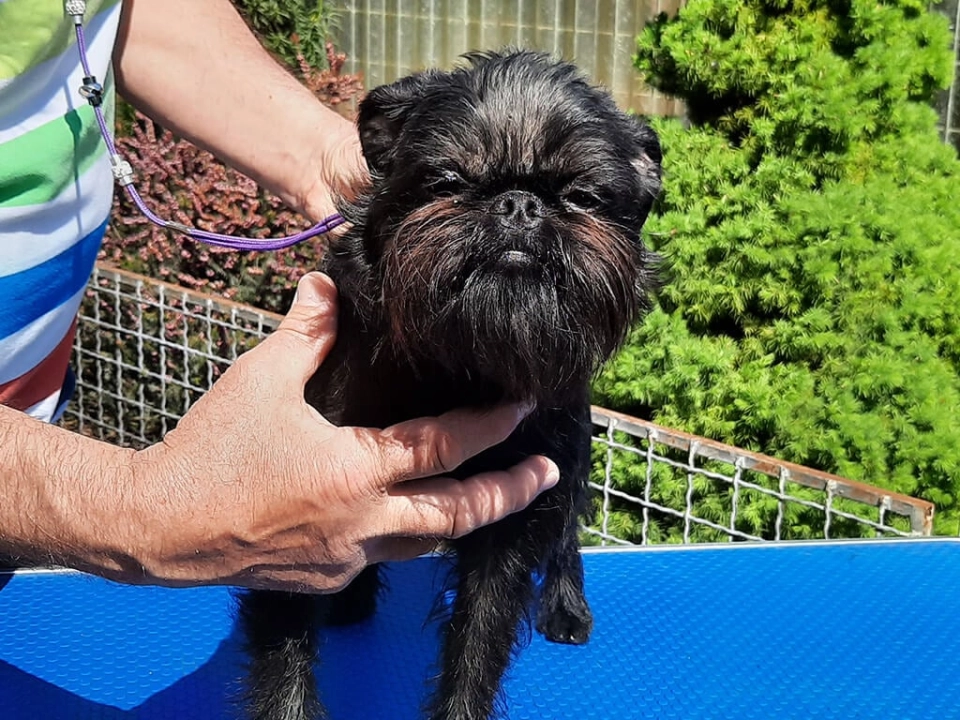
The Affenpinscher — also known as the Monkey Terrier — punches well above its weight in personality, and its exercise needs reflect that. Around 30 to 40 minutes of activity per day is all this small breed needs: two short walks, some indoor play, or a mix of both. This is a dog that thrives on variety, not marathon sessions.
Many families who chose an Affenpinscher find that training rewards patience far more than force. This breed is clever, food-motivated, and genuinely eager to engage — as long as you keep sessions short, fun, and consistent. Harsh corrections are counterproductive. The owners who get the best results treat training as a daily game rather than a formal lesson.
-
How do I handle my Affenpinscher’s stubbornness during training?
Keep sessions short — five to ten minutes maximum. The moment your dog loses interest, stop and try again later rather than pushing through. Use treats as motivation, reward immediately after the correct behaviour, and never repeat a command your dog is ignoring. Frustration on your end makes stubbornness worse, not better.
-
What kind of mental stimulation does an Affenpinscher need?
More than most people expect. Puzzle toys, sniff games, and short training challenges keep their sharp minds engaged. Without it, a bored Affen will find its own entertainment — and you probably won’t enjoy the results. Ten minutes of brain work can calm them better than a long walk.
-
Are Affenpinschers easy to train for first-time owners?
They are trainable — but don’t expect instant obedience. The Affenpinscher is intelligent and food-motivated, which works in your favour. The challenge is their independent, stubborn streak: they understand what you’re asking; they just sometimes decide not to comply. First-time owners who stay consistent and keep sessions positive will absolutely succeed.
Affenpinscher Health & Wellness
Common Issues and Lifelong Care
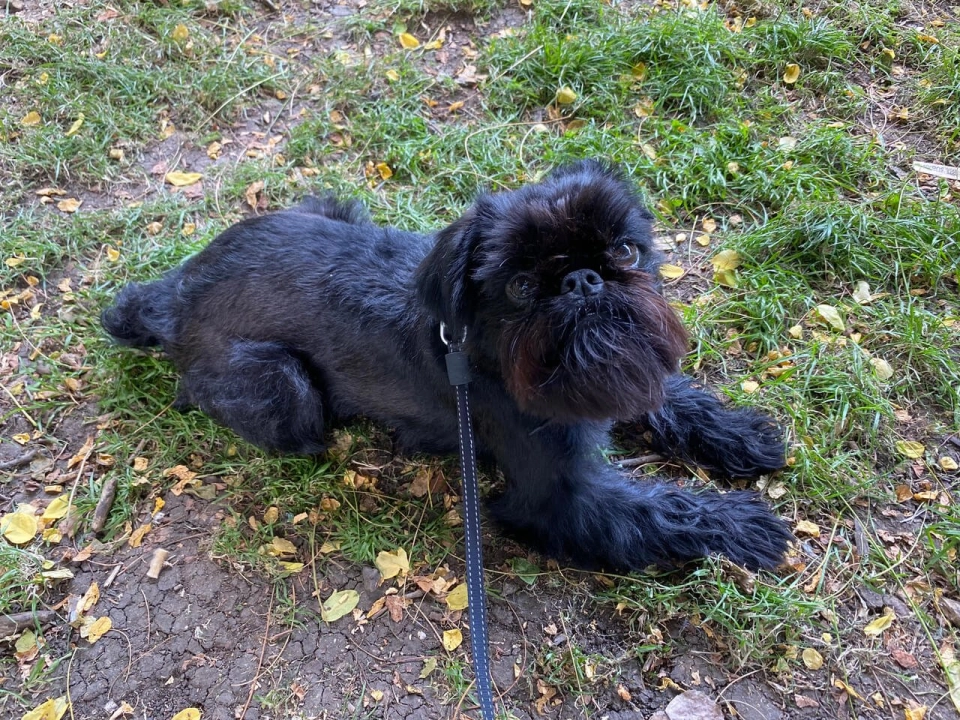
The Affenpinscher is a generally robust and long-lived little breed, with most dogs enjoying a healthy life of 12 to 15 years. They are not burdened by a long list of serious genetic conditions — which is a genuine strength of the breed. That said, like every purebred dog, they do carry a handful of vulnerabilities worth knowing about before you bring one home.
Patellar luxation — a condition where the kneecap slips out of its normal groove — is the most commonly reported health issue in this breed. Affenpinschers are active, energetic dogs that love to jump and play, which places ongoing demand on their small joints. Mild cases are often managed conservatively, but more severe luxation may require surgical correction.
Eye health is another area to monitor throughout your dog’s life. Cataracts can develop as the Monkey Terrier ages, gradually clouding the lens and reducing vision. Routine annual eye checks with your vet are the simplest way to catch early changes. Early detection makes a real difference to treatment outcomes and quality of life.
Many families who chose an Affenpinscher tell us they were surprised by how important dental care turned out to be. Small breeds with compact jaws tend to experience tooth crowding, which accelerates plaque buildup and can lead to gum disease and tooth loss. Daily tooth brushing — or at minimum regular professional dental cleanings — should be part of your routine from puppyhood.
As they enter their senior years, some Affenpinschers may develop mitral valve disease — a heart condition where the valve between the heart’s chambers gradually weakens. It is manageable with veterinary medication and monitoring, but it does mean regular cardiac check-ups become increasingly important from around age seven onward. Annual wellness exams are the best investment you can make in a long, happy life together.
-
What health tests should I ask an Affenpinscher breeder about?
Ask your breeder for results from a patella and hip evaluation, a certified eye exam by a veterinary ophthalmologist, and a cardiac screening by a veterinary cardiologist. These three checks cover the Affenpinscher’s most documented vulnerabilities. Responsible breeders perform these tests on both parents before breeding and will share the results openly.
-
Is the Affenpinscher a brachycephalic breed — and what does that mean for daily life?
Yes — the Affenpinscher is a brachycephalic breed, meaning its flat face and short muzzle naturally restrict airflow. In practice, this means your dog may snore, breathe noisily, and overheat more quickly than longer-nosed breeds. Avoid strenuous exercise in hot or humid weather, and always keep fresh water close. Most Affenpinschers manage well with simple daily awareness.
Essential Affenpinscher Care
Grooming, Feeding, and Daily Needs
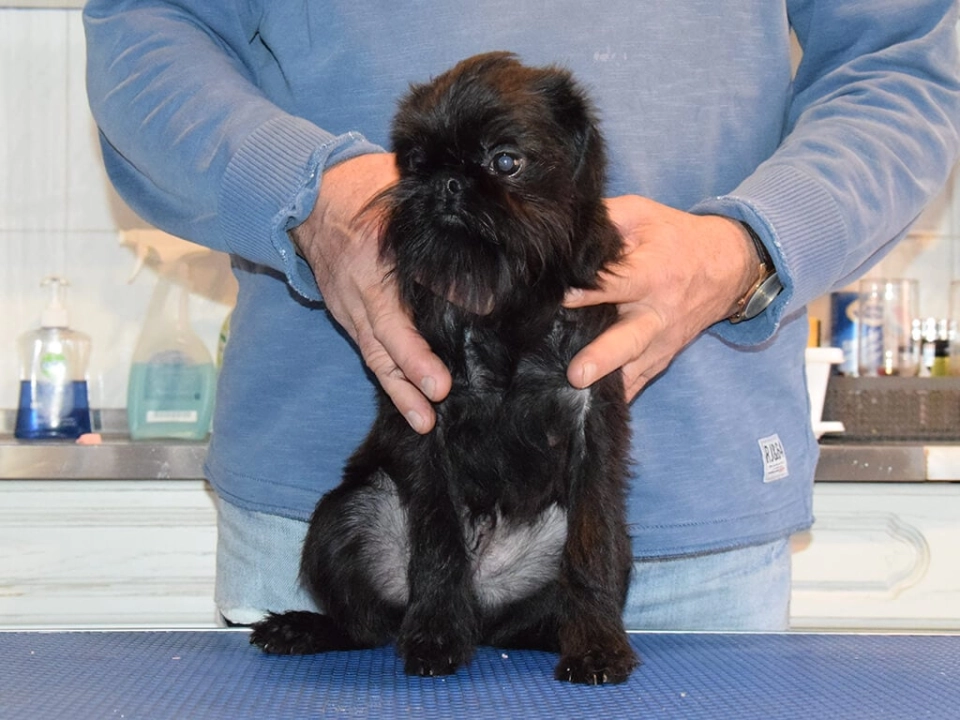
The Affenpinscher is a low-shedding breed, but its wiry coat needs brushing two to three times a week to prevent mats — especially around the beard and legs. Daily beard and eye checks are essential, as food and moisture collect there quickly. Many families who chose an Affenpinscher through EuroPuppy find that a damp cloth near the food bowl makes beard care a simple daily habit.
Feeding an adult Affenpinscher is straightforward — two measured meals a day of a quality small-breed kibble works well. Puppies need three to four smaller meals daily to support their growth. Watch portions carefully, as this small breed gains weight easily if treats go unchecked throughout the day.
-
Do Affenpinschers shed, and are they truly hypoallergenic?
Affenpinschers shed very little, which makes them a popular choice for allergy-prone households. While no dog is 100% allergen-free, the Affenpinscher’s low-shedding coat produces far fewer airborne allergens than most breeds. Regular brushing and beard cleaning significantly reduce allergen buildup in the home, so keeping up with grooming is especially important for allergy sufferers.
-
How much should I feed an Affenpinscher, and how often?
Adult Affenpinschers do well on roughly ½ cup of quality small-breed dry food per day, divided into two meals. Puppies need three to four smaller meals daily. Always measure portions — these are small dogs and even a little extra food every day adds up. Adjust amounts based on your dog’s weight, age, and activity level.
-
Where does an Affenpinscher mat first, and how do I stop it before it gets bad?
Mats form fastest behind the ears, under the front legs, around the collar, and in the beard — anywhere friction and moisture combine. Check these four zones every two to three days with a metal comb, not just a brush, since mats hide deep in the coat. Catching a tangle early takes seconds; leaving it a week means a professional detangling session.
-
My Affenpinscher’s coat is getting soft and fluffy — is that normal, or is something wrong?
If your dog has been clipped before, a soft, fluffy coat is a common and expected result — it’s not a health problem, but it is a sign the wire texture has been altered by repeated clipping. Transitioning back to hand-stripping over several sessions can gradually restore the rough coat. If the dog has never been clipped, speak with your vet, as very soft texture can sometimes signal a dietary or skin issue.
-
Will clipping ruin my Affenpinscher’s coat, and should I hand-strip instead?
Clipping won’t hurt your dog, but it does permanently change the coat’s texture over time — the wire feel softens, the colour lightens, and the coat becomes harder to maintain. Hand-stripping removes dead hair from the root, preserving the natural rough texture. For owners who love the breed’s signature scruffy look, hand-stripping every three to four months is worth the effort.
Is Affenpinscher Right for You?
Suitability and Lifestyle Match
The Affenpinscher suits someone who wants a bold, lively companion in a small frame — comfortable in a city apartment or a family home alike. Affenpinscher owners consistently tell us this breed thrives with moderate daily exercise, short play sessions, and close human company. Eager to please and quick to learn, it is a genuinely rewarding choice for first-time owners.
That said, the Monkey Terrier isn’t a good fit for households where everyone is out for long stretches — it bonds deeply and dislikes being left alone. Families with very young children should also be thoughtful, as its small size makes it vulnerable to rough handling. Give it a warm, attentive home, and it will repay you tenfold.
Practical Guide to choosing and buying a Affenpinscher
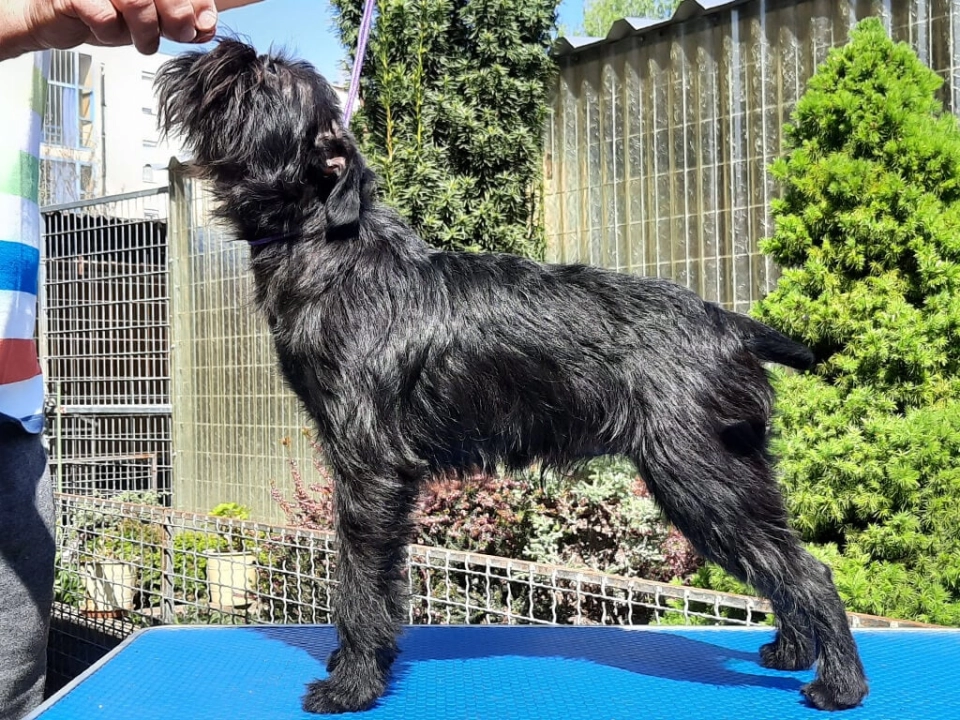
Expect to invest €1,500 to €3,500 for an Affenpinscher from a breeder with champion bloodlines, full health testing, and a written health guarantee. Most quality listings cluster between €1,800 and €2,800. This is one of Europe’s genuinely rare toy breeds, with very few active show-quality programs on the continent — keeping supply tight and prices higher than comparably-sized companion breeds.
Day-to-day ownership means budgeting for quality food, routine vet visits, preventive care, and regular professional grooming. The Affenpinscher’s wiry, shaggy coat needs trimming or hand-stripping every eight to twelve weeks to stay healthy and tangle-free — a recurring cost that is non-negotiable for this breed.
Pet insurance is the one optional cost worth prioritising: luxating patellas and eye issues are documented concerns in the Affenpinscher, and having coverage in place before problems arise can save you significantly.
A note on this guide: The information here reflects over 25 years of experience working with Affenpinscher breeders, professional dog trainers and licensed veterinarians — enriched by real-world insights from thousands of EuroPuppy families who live with this breed every day.
Similar Breeds
Ready for your Affenpinscher Puppy?
New Puppy Alert
Be ahead of the Crowd when a new Affenpinscher is available by signing up to our Puppy Alert.