Trusted by Over 15 000 Families since 2001



 Available Puppies
Currency
Country
Language

Akita Inu Breed Guide
An ancient, Oriental, hunting breed
Written by Sandor Fagyal, EuroPuppy Founder &
Dog Industry Expert
Last updated: Apr 1, 2026

Suitability

Good with Kids

Needs Supervision with Pets

Potentially Suitable for Apartments

Challenging for first-time owners

Breed
Size
Large
Height
66-71 cm
26-28 inches
Weight
30-47 kg
75-120 pounds
Lifespan
10-12 years
Coat Type
Medium double coat
Colors
Red fawn, sesame, brindle, white. Urajiro markings required except on white

Care

High Energy (Active, needs exercise)

60–90 minutes of exercise/day

Moderate (Weekly grooming needed)

Frequent shedding

Rarely barks

Difficult (Hard to train)

Some health risks

Not allergen (Sheds allergens)

Needs Constant Company
Similar Breeds



Ready for your Akita Inu Puppy?
Akita Inu At-a-Glance
Breed Overview & Physical Traits

The Akita Inu takes its name from Akita Prefecture in northern Japan, where it was developed over centuries in the rugged Tōhoku mountains. Its ancestors — the Matagi Inu — were fearless hunting dogs used to track, corner, and hold large and dangerous game, including black bears, wild boar, and deer, in deep snow.
During Japan’s feudal period, the Japanese Akita became a treasured possession of the samurai class, selectively bred for greater size, strength, and guarding instinct. Ownership was restricted to the nobility and warrior class alone. In 1931, Japan officially declared the breed a national natural monument — a status that reflects the profound cultural reverence the Japanese hold for this dog.
Today, the Great Japanese Dog thrives as a loyal family guardian and devoted companion. While no longer needed for hunting or warfare, it carries every ounce of its natural alertness and protectiveness into the home. This breed is best suited to experienced, confident owners who provide calm, consistent leadership — and a household that treats it as a true family member.
The Akita Inu is the largest of Japan’s native Spitz breeds — powerful, well-proportioned, and built for mountain terrain. The broad, bear-like head, flat skull, strong short muzzle, and thick forward-inclined ears create a proud, alert expression. Males stand 64–70 cm at the shoulder, and a tightly curled tail carried over the back is the breed’s unmistakable silhouette.
The double coat has a thick, soft undercoat and a harsh, stand-off outer coat. Accepted colors under the breed standard are red fawn, sesame, brindle, and white. All colors except white must display urajiro — the pale cream shading on the muzzle, cheeks, chest, and underside. Importantly, a black mask is a disqualifying fault in the Akita Inu standard.
Akita Inu Temperament
Playfulness, Affection, and Social Traits

The Akita Inu — known simply as the Akita in its native Japan — is not a dog that gives its heart to just anyone. When it does, that bond is absolute. Many families who chose an Akita Inu through Euro Puppy find that the connection that develops is unlike anything they’ve experienced with another breed: quiet, layered, and fiercely devoted.
Around strangers and outside the home, the Akita is composed, watchful, and naturally reserved — a dignified guardian by instinct. At home with family, a completely different side appears: warm, attentive, and occasionally delightfully silly. This breed demands patience and experienced handling, but rewards it with a loyalty that few other dogs can match.
-
Are Akita Inus affectionate dogs?
Akitas are deeply affectionate — but entirely on their own terms. They reserve that warmth exclusively for family, showing quiet, devoted loyalty rather than constant, showy affection. Don’t expect them to warm up to strangers or casual visitors. With the people they trust, though, they are tender, attentive, and surprisingly expressive.
-
Are Akitas playful, or too serious for a family?
Behind closed doors, Akitas have a genuinely goofy, playful side that surprises most first-time owners. They run, clown around, and entertain the family they love. In public or around strangers, that playfulness disappears and their calm, dignified nature takes over. Their fun side is real — it’s just reserved for the people who’ve earned it.
-
Do Akitas get along with other dogs?
Akitas are naturally dominant, and same-sex dog aggression is common in the breed — many prefer being the only dog in the home. Opposite-sex pairings tend to work better. Early, careful socialization helps, but their strong-willed nature means dog introductions should always be handled with patience and caution.
Akita Inu Exercise & Training
Activity Requirements for a Happy Dog

The Akita Inu, also known as the Japanese Akita or Great Japanese Dog, is not a high-octane breed that demands constant movement — but do not mistake that for easy-going. This is a powerful dog built on stamina, and without structured daily exercise, that quiet energy turns into restlessness. Plan for at least an hour of purposeful activity every single day.
Many families who chose an Akita Inu find that training requires more patience than they expected. This breed is intelligent and observant — it reads your body language better than it listens to commands. Early socialization and calm, clear leadership make all the difference. Push too hard or stay inconsistent, and your Akita will simply decide it knows better.
-
How do I mentally stimulate my Akita Inu at home?
Puzzle feeders, scent games, and short obedience sessions are exactly the mental challenge this breed needs. Without it, boredom arrives fast — and a bored Akita becomes destructive or stubborn. Rotate activities regularly; this dog loses interest when asked to repeat the same thing over and over. Variety keeps their sharp, independent mind engaged and working for you.
-
Can an Akita Inu live with other dogs or pets?
With early socialization, most Akitas can coexist peacefully with pets they have been raised alongside. However, same-sex aggression is a genuine risk and should never be underestimated. Never leave them unsupervised with unfamiliar dogs, and always keep them leashed on walks — their territorial nature and strong prey drive can escalate quickly in uncontrolled outdoor settings.
-
How much exercise does an Akita Inu need each day?
Plan for at least one hour of structured exercise daily, split into two solid walks. The Akita Inu runs on stamina rather than frantic energy — a brisk 30-minute morning walk plus an active afternoon session is the sweet spot. A securely fenced yard is a real bonus, giving your dog space to move and decompress on its own terms.
-
Are Akita Inus easy to train for first-time owners?
Honestly, no — but that does not mean impossible. The Akita Inu responds to calm, consistent leadership, not repetitive drilling or harsh corrections. Keep sessions short, around 10 minutes, use positive reinforcement, and start socialization and basic obedience from day one. A first-time owner who commits to early structure can absolutely succeed with this breed.
Akita Inu Health & Wellness
Common Issues and Lifelong Care

The Akita Inu, also known as the Japanese Akita or Great Japanese Dog, is a fundamentally healthy and long-lived breed. Most individuals live between 10 and 13 years. Owners who stay proactive — through regular vet visits, responsible exercise, and early screenings — consistently achieve the upper end of that range and beyond.
Hip dysplasia is the most commonly diagnosed hereditary condition in this breed, with studies suggesting nearly one in five Akitas is affected. Elbow dysplasia is also documented. Neither condition is inevitable. Choosing a puppy from parents with OFA-certified clearances, keeping your dog lean, and avoiding high-impact exercise during puppyhood are your three most powerful preventive steps.
Eye health deserves close attention throughout this breed’s life. The Japanese Akita is prone to several inherited conditions — progressive retinal atrophy (PRA), juvenile cataracts, and entropion, where the eyelid rolls inward and irritates the surface of the eye. Annual CAER eye examinations by a specialist are standard in responsible breeding programs and help catch problems before they progress.
Bloat — known clinically as gastric dilatation-volvulus (GDV) — is a life-threatening emergency that can affect large, deep-chested breeds like this one. The stomach twists and traps gas, causing rapid deterioration. Two simple habits dramatically reduce the risk: feeding two smaller meals a day rather than one large meal, and avoiding vigorous exercise for at least an hour after eating.
One trait that catches many first-time owners off guard is this breed’s known sensitivity to anesthesia. Certain drugs and dosages that are completely routine in other dogs can cause serious complications in an Akita. Always tell your vet — and especially any emergency clinic — about this before any procedure requiring sedation or anaesthesia. Not every vet will know without being told.
Many families who chose an Akita Inu find that the most important decision they made was selecting a puppy from health-tested parents. Starting from a screened bloodline dramatically reduces the likelihood of inherited disease. Add annual wellness checks, a lean body condition, and a vet who knows the breed, and you are as prepared as any owner can be.
-
What health tests should I ask an Akita Inu breeder about?
Ask for certified hip and elbow clearances from a recognised scheme in the breeder’s country — such as FCI, BVA, or PennHIP — and an eye examination performed by a board-certified veterinary ophthalmologist within the past 12 months. A full thyroid panel including TgAA antibody testing and a cardiac evaluation round out the essential screening list.
-
Are Akita Inus prone to autoimmune diseases?
The Akita Inu carries a genuine predisposition to autoimmune conditions. The most striking is Uveodermatologic Syndrome (UDS) — an immune-mediated disorder attacking the eyes and skin pigmentation, typically appearing between 18 and 24 months of age. Autoimmune thyroiditis and hypothyroidism are also common but manageable with daily medication once diagnosed early.
Essential Akita Inu Care
Grooming, Feeding, and Daily Needs
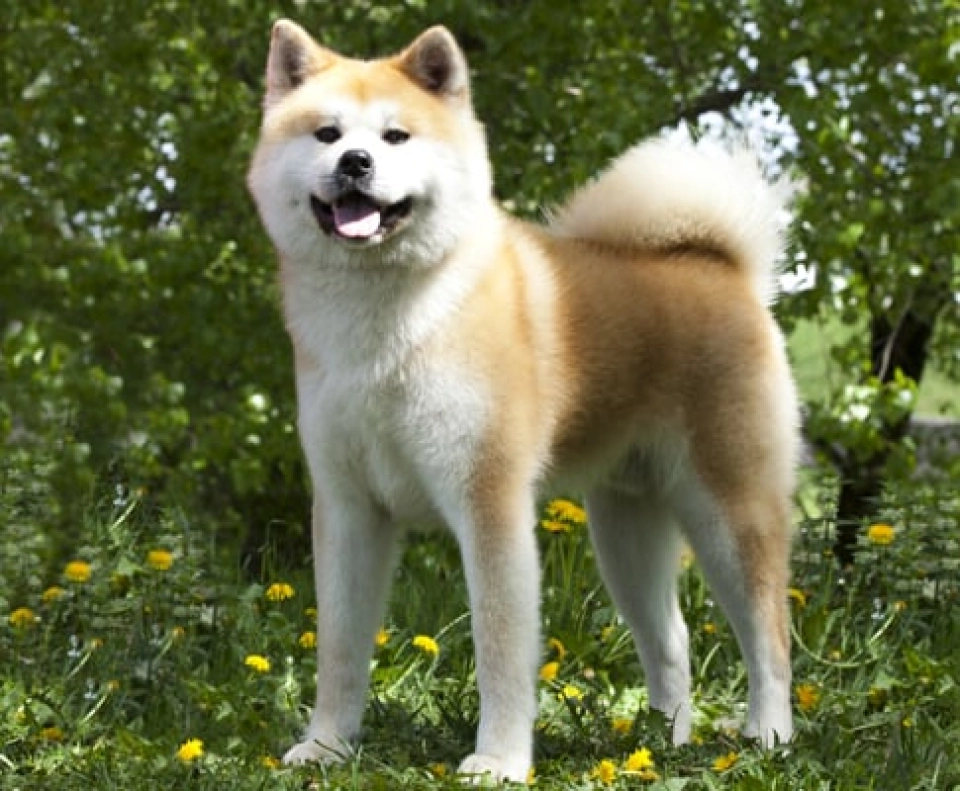
The Akita Inu, also known as the Japanese Akita, has a self-cleaning double coat that is surprisingly odour-free and manageable between shedding seasons. Weekly brushing with a slicker brush and an undercoat rake is enough day to day. One important rule: bathe only when necessary, as frequent bathing strips the coat of its natural waterproofing.
Akita Inu owners consistently tell us that feeding is straightforward, but portion control is essential. Adults do best on two meals a day — morning and evening — with roughly 3–5 cups of quality dry food in total. Puppies under six months need three smaller meals. Splitting meals also helps reduce the risk of bloat, a concern for large breeds.
-
Can I manage Akita Inu grooming at home, or do I need a professional groomer?
Most Akita Inu owners handle routine brushing at home with the right tools. Booking a professional groomer every 8–12 weeks for a thorough bath, nail trim, and ear clean is a smart idea — especially during heavy shedding season, when the sheer volume of loose undercoat can feel genuinely overwhelming without help.
-
How much and how often should I feed an adult Akita Inu?
An adult Akita typically needs roughly 3–5 cups of high-quality dry food per day, split into two meals. Exact amounts vary by your dog’s weight, age, and activity level. Because Akitas can gain weight easily, avoid free-feeding and strictly follow the feeding guidelines on your food packaging to prevent unnecessary weight gain.
-
Does the Japanese Akita shed a lot, and how do I manage it at home?
Yes — the Japanese Akita sheds heavily twice a year, in spring and autumn. During these blow coat periods, daily brushing is essential and fur will be everywhere in the home. For the rest of the year, a weekly brush keeps things very manageable. Many Akita owners quietly recommend investing in a good vacuum cleaner.
-
How often should I groom an Akita Inu and what tools do I need?
Outside of shedding seasons, brush your Akita Inu once a week using a slicker brush and undercoat rake. During the two annual “blow coat” periods in spring and autumn, brush daily to manage loose fur. A deshedding blade is a real time-saver. Never clip the coat — it damages the natural protective layer.
Is Akita Inu Right for You?
Suitability and Lifestyle Match
The Japanese Akita thrives with an experienced, confident owner who leads with calm consistency. Akita Inu owners consistently tell us that this breed rewards clear boundaries with an almost unshakeable devotion. A house with a securely fenced garden in a cooler climate is ideal — this dignified dog wants to stay close to its family, indoors and out.
If you work long hours away from home, the Akita will struggle — this breed craves constant company and dislikes being alone for long. It also asks for careful management around other pets and young children. But if you have the experience, the space, and the time to be present, few breeds will match its loyalty.
Practical Guide to choosing and buying a Akita Inu
-
How much does an Akita Inu puppy cost?
A well-titled Akita Inu, also called the Japanese Akita, from a proven European breeder typically falls in the 2,000–4,000 EUR range, with most puppies from established lines sitting closer to 2,500–3,200 EUR. Because serious Akita breeders produce just a few litters a year to maintain the breed’s notoriously demanding temperament standards, availability stays limited and waiting times are common.
-
What other costs do I need to consider when owning an Akita Inu?
Food is a major ongoing cost — the Akita Inu is large and eats accordingly. Routine vet visits, vaccinations, and flea and heartworm prevention are essential. Grooming is manageable: weekly brushing works well, with extra effort during twice-yearly heavy shedding.
Pet insurance is especially wise given this breed’s known anesthesia sensitivity. Professional training is a smart addition for the Akita’s independent nature.
A note on this guide: The information here reflects over 25 years of experience working with Akita Inu breeders, professional dog trainers and licensed veterinarians — enriched by real-world insights from thousands of EuroPuppy families who live with this breed every day.
Similar Breeds
Ready for your Akita Inu Puppy?
New Puppy Alert
Be ahead of the Crowd when a new Akita Inu is available by signing up to our Puppy Alert.