Trusted by Over 15 000 Families since 2001



 Available Puppies
Currency
Country
Language

Alaskan Malamute Breed Guide
An, elegant, ancient, Arctic, sled dog
Written by Sandor Fagyal, EuroPuppy Founder &
Dog Industry Expert
Last updated: May 12, 2026

Suitability

Good with Kids

Needs Supervision with Pets

Unsuitable for Apartment Living

Challenging for first-time owners

Breed
Size
Extra Large
Height
61-66 cm
24-26 inches
Weight
36-43 kg
80-95 pounds
Lifespan
10-14 years
Coat Type
Medium dense coat
Colors
Light to dark grey, black, sable, red, always with white

Care

Very High Energy (Requires lots of activity)

90–120 minutes of exercise/day

Moderate (Weekly grooming needed)

Frequent shedding

Alerts to Visitors

Difficult (Hard to train)

Some health risks

Not allergen (Sheds allergens)

Okay Alone for a While


Ready for your Alaskan Malamute Puppy?
Alaskan Malamute At-a-Glance
Breed Overview & Physical Traits

Few breeds carry as much history as the Alaskan Malamute. Named after the Mahlemut, an Inuit tribe who settled along Alaska’s Kotzebue Sound, this ancient sled dog was bred over thousands of years to haul heavy freight across frozen Arctic terrain — relying on stamina and strength rather than speed.
The breed nearly disappeared during the late 1800s Gold Rush, when outside dogs flooded Alaska and mixed freely with native sled dogs. The Mahlemut people’s remote, isolated lifestyle kept their dogs largely pure — a remarkable survival story that makes the Mal one of the few Arctic breeds to retain its original working character.
The AKC recognized the Alaskan Malamute in 1935, and the breed went on to serve in both World Wars as a freight and search dog. Today, the Mally rarely pulls sleds professionally, but that working soul is still very much alive — this is a dog that needs a purpose, and thrives with active families who can give it one.
Living with a Malamute is deeply rewarding, but it demands commitment. This is not a dog for small apartments or passive owners. They are pack-oriented and people-focused — happiest when part of a family that hikes, runs, or simply spends long hours outdoors. First-time owners often underestimate just how much energy and leadership this breed genuinely needs.
The Alaskan Malamute has a thick double coat built for extreme cold — a coarse, weatherproof outer coat and a dense, oily undercoat roughly one to three inches deep. The coat sheds heavily, especially twice a year during seasonal blowouts, and needs brushing at least twice a week to keep it healthy and mat-free.
The coat ranges from light grey to black, and from sable through to red — always with white on the underbody, legs, feet, and parts of the face. Cap-like or mask-like face markings are the hallmark of the breed. The only solid colour a Malamute may have is all-white; broken patches across the body are considered a fault.
Alaskan Malamute Temperament
Playfulness, Affection, and Social Traits

Alaskan Malamute owners consistently tell us that the thing that surprises them most is how deeply social and people-oriented this breed truly is. The Mal isn’t bonded to one person — it spreads its affection generously across the whole family. Warm, expressive, and physically demonstrative, this is a dog that leans in, nudges you for attention, and genuinely needs to be part of everything you do.
Playfulness is built into the Mal’s DNA. Even as adults, they hold onto a puppy-like exuberance — ready to romp, chase, and clown around when the mood strikes. That said, they carry a quiet dignity too, especially as they mature. This balance of goofiness and composure is part of what makes living with a Malamute feel so genuinely rewarding.
-
Are Alaskan Malamutes friendly with strangers?
Very. The Mal greets almost everyone — visitors, neighbors, strangers on a walk — as a potential friend. This breed is not a guard dog by nature. If you want an intimidating protector, look elsewhere. If you want a big, sociable dog that makes people smile wherever you go, a Malamute delivers every time.
-
Do Alaskan Malamutes get along with other dogs?
Well-socialized Malamutes generally live happily with other dogs, but their strong pack instinct can lead to dominance issues — especially between dogs of the same sex. Early, consistent socialization is key. As they mature around age two or three, they may assert rank more firmly, so confident, clear leadership from you makes a real difference.
-
Are Alaskan Malamutes good with kids?
Alaskan Malamutes are gentle and patient with children, but their sheer size and boisterous energy mean young kids can easily get knocked over by an excited Mal. They suit families with older children and teens best. Always supervise interactions and teach kids how to engage calmly — with the right boundaries, this breed is a joyful, devoted playmate.
Alaskan Malamute Exercise & Training
Activity Requirements for a Happy Dog

The Alaskan Malamute — often called a Mal — was born to work. This breed needs at least 90 to 120 minutes of exercise every day, ideally split across two long walks or hikes. A jog around the block will not cut it. Many families who chose a Malamute find that their own fitness routine improved significantly once this dog arrived.
Training this breed takes patience and a sense of humor. Malamutes are intelligent, independent thinkers who respond well to positive reinforcement but will test any owner who is inconsistent. Repetitive obedience drills will lose their attention fast. Keep sessions short, varied, and reward-driven — and start the moment your puppy comes home. Leadership established early makes everything easier later.
-
What mental stimulation does an Alaskan Malamute need?
Daily mental engagement is just as important as the morning walk. Scent games, hide-and-seek, puzzle feeders, and canine sports like weight pull or skijoring tap into this breed’s working instincts. Even 15 minutes of structured problem-solving can take the edge off a restless Malamute. A bored mind in a powerful body is a recipe for chaos.
-
What happens if you don’t exercise a Malamute enough?
An under-exercised Malamute will find its own outlet — and you won’t like it. Digging, chewing, escape attempts, and non-stop howling are the most common results. This breed was built to haul sleds across miles of Arctic terrain. Without a physical outlet every single day, that energy has nowhere to go except your furniture and fence.
-
Are Alaskan Malamutes hard to train for first-time owners?
They are challenging but not impossible — the key is understanding how they learn. Malamutes are intelligent but independent, and they quickly lose interest in repetitive drills. Short, varied sessions with positive reinforcement work far better than strict obedience routines. Starting early, staying consistent, and treating training like a game will get real results.
Alaskan Malamute Health & Wellness
Common Issues and Lifelong Care

The Alaskan Malamute is a robust, powerful Arctic breed — but that strength doesn’t make it immune to health challenges. Like all large, working dogs, the Mal carries a handful of hereditary conditions that every prospective owner should understand before bringing a puppy home. The good news is that most of these conditions are manageable, and many are preventable with the right breeder choice.
Hip dysplasia is the most widely discussed orthopedic issue in the breed. It develops when the hip joint forms improperly, causing bones to rub together — leading to pain and progressive arthritis over time. A specialist radiographic evaluation of both parents, submitted before breeding, is the single most effective way to reduce the risk of this condition appearing in puppies.
Hypothyroidism is one of the most common conditions seen in Malamutes, yet it surprises many new owners. The thyroid gland underproduces hormones, causing weight gain, lethargy, hair loss, and sometimes subtle changes in mood or behaviour. The condition is easily managed with daily medication and regular blood monitoring — most affected dogs live full, comfortable lives once the right dose is established.
Inherited polyneuropathy (AMPN) is a neuromuscular condition unique to the breed. It gradually weakens the muscles — especially in the hind legs — and can progress over time. DNA testing for the responsible gene mutation allows breeders to identify clear, carrier, and affected dogs before a single puppy is born. Asking your breeder for test results on both parents is a simple, powerful safeguard.
Eye health deserves attention in this breed. Hereditary cataracts and cone degeneration (day blindness) are both documented in Alaskan Malamutes. Affected dogs may struggle to see clearly in bright light, or develop clouded lenses as they age. Annual eye examinations by a veterinary ophthalmologist are a straightforward way to catch early changes and, where needed, explore surgical options before vision becomes severely affected.
Many families who chose a Mal find the breed is generally hardy and full of vitality — with a typical lifespan of 10 to 12 years. Twice-yearly vet checkups from middle age, a weight-appropriate diet, and consistent exercise throughout life all play a meaningful role in how long these dogs thrive. Starting those habits from day one makes a real difference.
-
What is chondrodysplasia in Alaskan Malamutes?
Chondrodysplasia — informally called Malamute dwarfism — is a recessive genetic disorder that causes abnormal bone development, particularly bowing and shortening of the front legs. It’s almost exclusive to this breed. Responsible breeders use DNA testing to identify carriers before breeding, so that affected puppies are never produced. Always ask whether both parents have been tested clear.
-
What health tests should I ask for when buying an Alaskan Malamute puppy?
At minimum, ask for hip evaluation results, a DNA test for chondrodysplasia and polyneuropathy, thyroid screening, and an eye certificate from a veterinary ophthalmologist — all carried out on both parents. Internationally recognised schemes such as FCI, BVA, and PennHIP all offer hip evaluations. A reputable breeder will share these results willingly and without hesitation.
Essential Alaskan Malamute Care
Grooming, Feeding, and Daily Needs
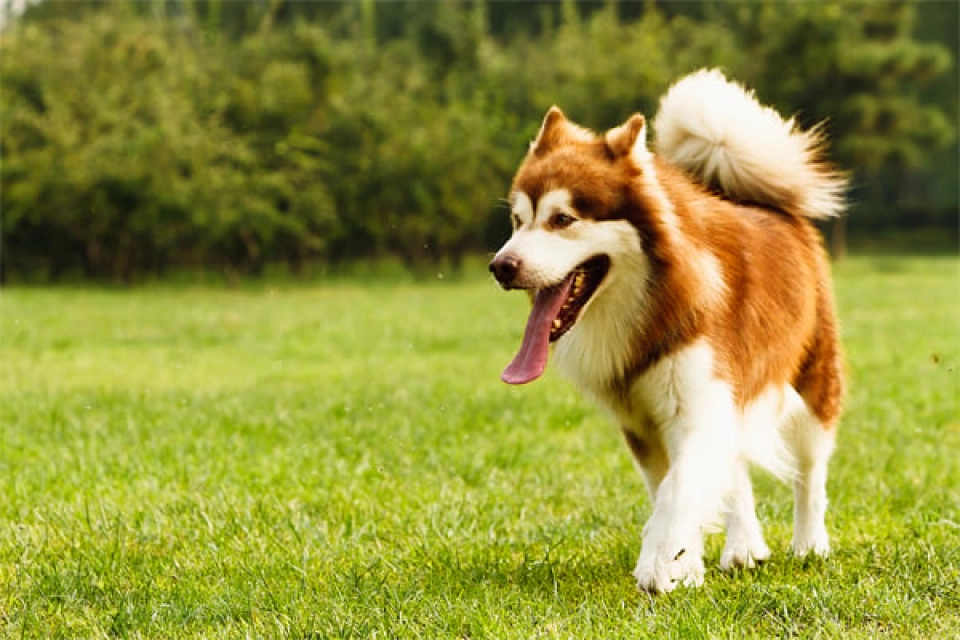
The Alaskan Malamute carries a thick double coat that sheds heavily and needs consistent attention to stay tangle-free. First-time owners are often surprised by how much fur this breed produces — not just during shedding season, but every day. The right tools make all the difference: an undercoat rake and a slicker brush are simply non-negotiable.
Many families who chose a Mal through EuroPuppy find that once grooming is in their weekly routine, it becomes enjoyable time with their dog. Don’t overlook ears, nails, and teeth — a quick weekly check keeps small problems from growing. Malamutes are enthusiastic eaters with a real tendency to overeat if portions aren’t carefully managed.
-
Should I ever shave my Alaskan Malamute’s coat in summer?
No — never shave a Malamute’s double coat. The coat acts as insulation in both cold and warm weather, protecting your dog from heat and sunburn. Shaving disrupts the coat’s natural structure and can cause it to grow back incorrectly. Regular brushing to remove dead undercoat is the right way to help your dog stay cool.
-
How much should I feed an adult Alaskan Malamute — and what about puppies?
Most adult Malamutes do well on 3 to 4 cups of high-quality dry food per day, divided into two meals — morning and evening. Puppies under six months need three smaller meals daily. Because Malamutes are prone to bloat, avoid feeding right before or after vigorous activity, and consider a slow-feeder bowl.
-
What is “blow coat” in Alaskan Malamutes, and how do I manage it?
Twice a year — typically spring and autumn — your Mal sheds most of their dense undercoat in large clumps, a process known as “blowing coat.” During this time, brush your dog every day and expect significantly more fur in your home. A high-velocity dryer after bathing can help loosen and speed up the process considerably.
Is Alaskan Malamute Right for You?
Suitability and Lifestyle Match
The Alaskan Malamute is made for active families who love the outdoors — people who hike at weekends and want a dog that genuinely keeps up. A house with a large, securely fenced garden is essential, as is prior dog experience. Based on feedback from our buyers, the sheer stubbornness of a Malamute is the most common surprise for new owners — this breed needs a confident, consistent leader to truly thrive.
If you work long hours away from home, live in an apartment, or face hot summers without shade and cooling options, the Mal will genuinely struggle. This is also not an ideal first dog — size, independence, and high exercise demands can quickly overwhelm. But if you can offer space, time, and an active routine, you’ll gain one of the most devoted and loyal companions imaginable.
Practical Guide to choosing and buying a Alaskan Malamute
-
What other costs do I need to consider when owning an Alaskan Malamute?
Budget for quality food (Malamutes eat a lot), routine vet visits, vaccinations, and preventive care. Grooming is a real commitment — this breed’s heavy double coat sheds year-round and blows out completely twice a year.
Pet insurance is especially worth considering — hip dysplasia and the genetic condition AMPN (polyneuropathy) can lead to costly vet bills. Early training classes are a smart optional investment too, given how strong-willed an Alaskan Malamute can be.
-
How much does an Alaskan Malamute puppy cost?
Champion-bloodline Alaskan Malamute puppies from reputable European breeders typically cost between €2,500 and €4,500. Most listings from established show kennels cluster in the €3,000–€4,000 range. The price reflects the extensive mandatory health screening required for this breed — including OFA hip X-rays, DNA testing for Alaskan Malamute Polyneuropathy (AMPN), and early chondrodysplasia screening of each litter.
A note on this guide: The information here reflects over 25 years of experience working with Alaskan Malamute breeders, professional dog trainers and licensed veterinarians — enriched by real-world insights from thousands of EuroPuppy families who live with this breed every day.
Ready for your Alaskan Malamute Puppy?
New Puppy Alert
Be ahead of the Crowd when a new Alaskan Malamute is available by signing up to our Puppy Alert.